


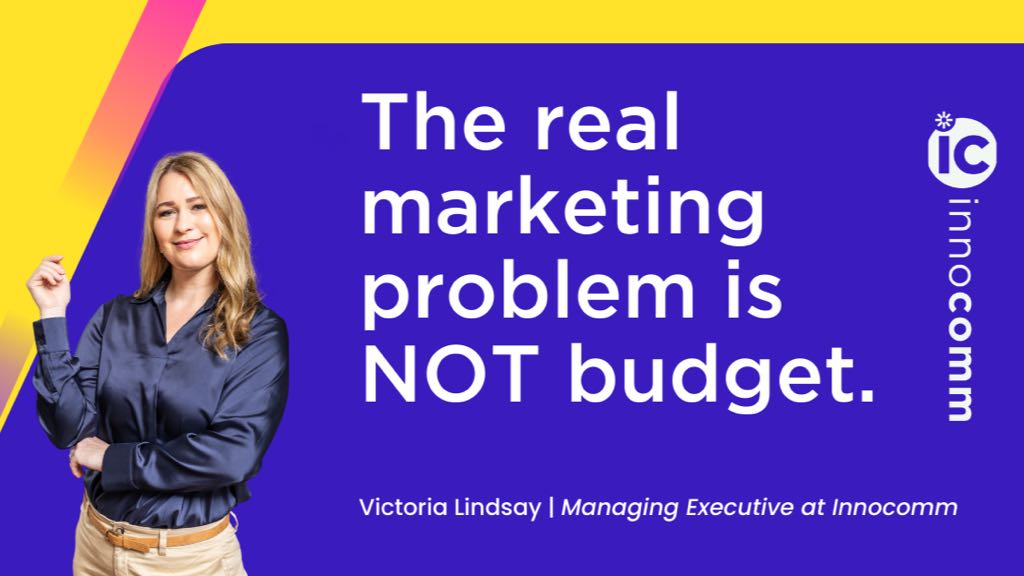
Marketing departments everywhere are running at minimum capacity. Not because the work is less important; but because the function itself is still very misunderstood.
In most organisations, marketing is treated as an expense rather than for what it truly is; an investment for growth. When the economy gets scary and budgets tighten, marketing is often the first place leadership looks to reduce (or totally) cut spend. The irony of this, is that marketing is one of the few functions in a business that is directly responsible for generating demand, shaping perception and supporting revenue.
However, after almost a decade working with various companies, I’ve seen that the teams responsible for this work are often and almost always, the most under-resourced and over-worked.
It is becoming increasingly common to see marketing departments of three or four people expected to deliver the work of twenty. The work load is plenty; strategy, campaigns, content production, events, digital management, PR, reporting, brand governance and internal communications. All of this sits on the shoulders of tiny teams that rarely have the time or space to operate strategically, and yet this is only one part of the challenge.
Marketing should not operate in isolation
Marketing sits at the intersection of almost every function within a business. For marketers to do their jobs effectively, they must understand the complexity of each business unit, align closely with directors, collaborate with sales teams, interpret product or solutions strategies and then translate that knowledge into messaging the market understands.
This ideal level of alignment requires participation from across the organisation. Unfortunately, many marketing teams are challenged with reluctance or slow participation from others in the business. They are frequently brought in late and expected to refine messaging or create campaigns once decisions have already been made. The pressure at this stage is high. Deadlines are tight, information is incomplete and internal input is limited.
Yet the expectation remains the same; deliver results and prove measurable impact. I see, and I get the frustration burdening marketing departments today. I see it even more when reporting cycles arrive; marketing teams are responsible for demonstrating performance against KPIs, pipeline influence, brand growth and lead generation. The pressure attached to those expectations is enormous, all the while the missing link to deliver effectively, is internal alignment.
External marketing directly reflects internal alignment
The effectiveness of external marketing is almost always determined by the strength of internal communication, yet this is often overlooked or last on the list of priorities.
If personnel do not clearly understand the brand they represent, the value proposition or the strategic direction of the business, external campaigns will always feel disconnected. Messaging will become inconsistent, sales conversations will drift and the customer experience is at high risk of becoming fragmented.
That’s because brand alignment cannot live purely in marketing collateral. It must exist within the culture of the organisation itself.
When internal communications are strong, and there is clarity across the board, then every department understands the same narrative. Everyone is able to buy into the processes and the respect for the marketing function improves. Leadership vision, marketing messaging and customer engagement begin to move in the same direction. Ultimately, the brand becomes more than a place you work, it becomes something people inside the business actually believe in and actively want to represent.
This alignment has a direct impact on customer experience; from the first interaction through to after sales service and long-term relationships.
The role of strategic agency partnerships
This is where the role of agency partners becomes critical. Marketing teams today rely heavily on agencies that can integrate quickly, work flexibly and understand the broader strategic objectives of the organisation. The most effective agencies do not operate purely as external suppliers; they operate as extensions of the internal team.
Rather than simply delivering predefined monthly outputs, strong agency partnerships help organisations step back and identify the deeper communication gaps that may exist internally.
Where are teams misaligned on messaging? Where does the brand promise disconnect from internal culture? Where does customer experience break down because internal clarity does not exist?
Addressing these questions allows communication to become the golden thread that connects leadership vision, company culture, brand messaging and customer experience.
Why we’re reinventing communication from the inside-out
Cutting marketing during challenging periods is never the solution. The real opportunity lies in rethinking how communication flows throughout the organisation.
When businesses invest in stronger internal alignment, clearer messaging and strategic collaboration between internal teams and external partners, marketing begins to function as it was always intended. Not as an expense. But as the engine that drives growth.
Nothing gets me more excited than working with companies to reinvent their communications strategy from the inside-out. This will become a stronger core focus for us this year. Because when communication is aligned internally, everything changes. Teams move faster, messaging becomes sharper, and the brand begins to show up consistently across every touchpoint. Marketing stops operating in reactive mode and starts leading with clarity and purpose.
The result is not just stronger campaigns; it is stronger culture, stronger customer relationships and ultimately stronger business growth. Reinventing communication from the inside-out is not a trend. It is the foundation for how we help organisations that want to compete, adapt and lead in the years ahead.
By Victoria Lindsay – Managing Executive at Innocomm


